
The cross-boundary impacts of China’s Longjiang dam
Summary
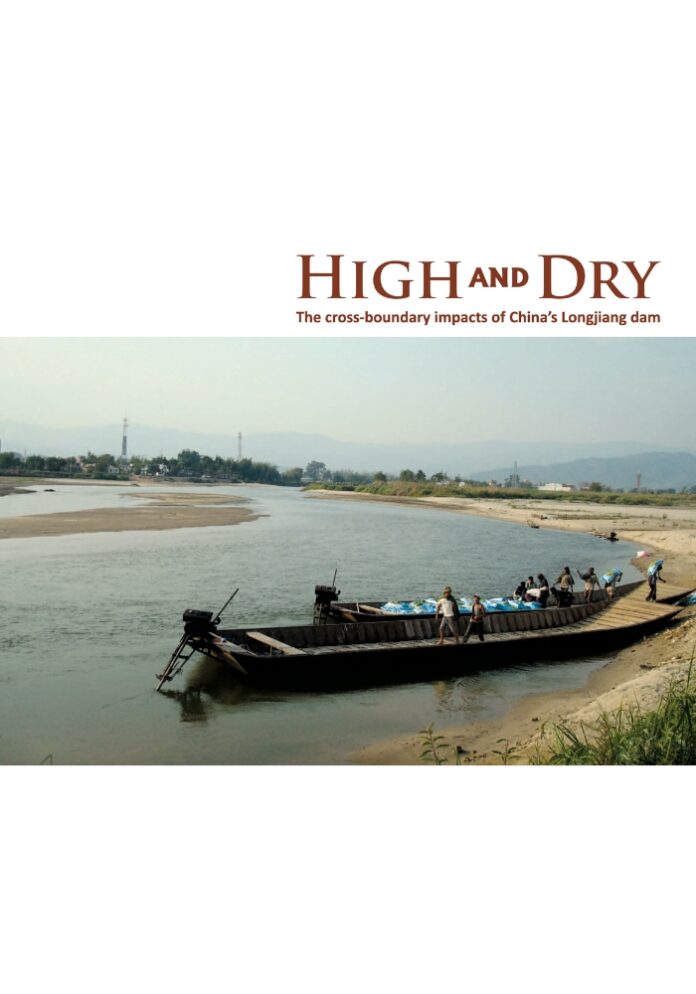
A recently built dam on the Longjiang (Nam Mao or Shweli) river in Yunnan Province of China has severely disrupted the livelihoods of about 16,000 villagers living in the Mao Valley along the northern Shan State border in Burma. The Ruili-Muse border crossing, in the Mao Valley, is the main border trade point between China and Burma, and local communities rely principally on income from ferrying goods across the river on either side of the crossing. However, in early 2010, when the reservoir in the Longjiang Dam started to be filled, the river dried up, falling to unprecedented low levels and bringing boats to a standstill. Since the start of the rains in May 2010, there have been huge daily fl uctuations in the river levels, causing not only grounding of boats, but also flooding of goods, cutting ferry workers’ incomes by up to two-thirds. The numerous ferry operators have thus had to drastically reduce the numbers of their trips. The resulting drop in trade is not only cutting the income of the riverside communities, but also that of many of the 30,000 people living in the town of Muse, who rely on the border trade. These communities were never informed by either Chinese or Burmese authoriti es about the dam and its impacts. They are urgently requesting the Chinese authorities to modify the dam’s operati on so that the river’s environmental fl ow can be restored, and the disruption to their livelihoods minimized. This case study provides evidence that builders of hydropower dams on transnational rivers in China have neglected to consider the trans-boundary environmental and social impacts of these projects. There is an urgent need for transparent, comprehensive and participatory assessments of the environmental and social impacts of these projects on the entire length of the rivers.